The NBA Is Back, TV Is Heating Up, and Pop Culture Is Moving: Why Now Is the Time to Learn Sync Licensing
By Tiger Backwoods | Music Business, Independent Producer, Entrepreneur
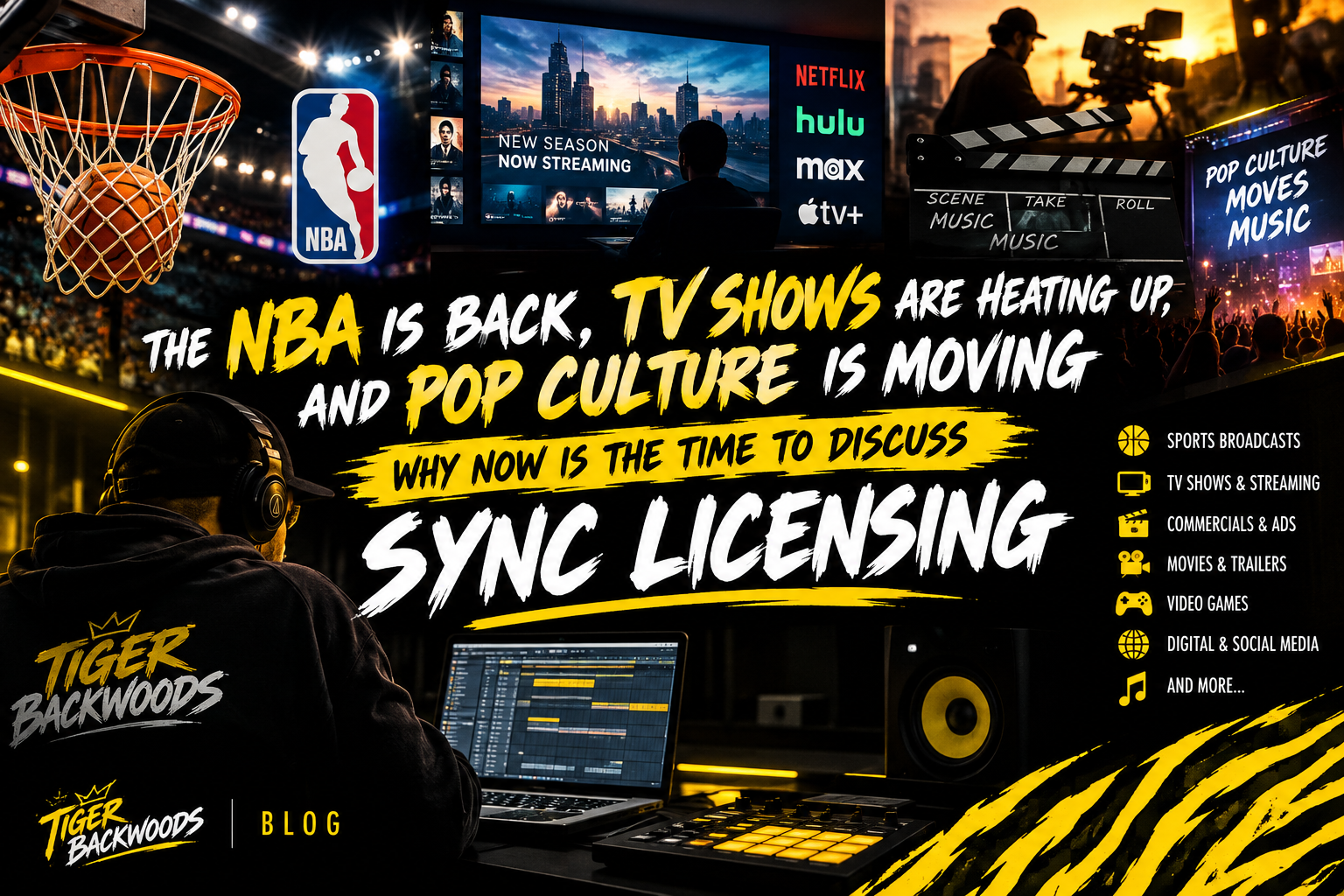
When the NBA season tips off, television shows return with new episodes, and pop culture starts dominating conversations again, there is more happening than just entertainment. There are opportunities for music producers, songwriters, and independent artists to get their music in front of new audiences.
This is the perfect time to talk about sync licensing.
Every season brings new sports broadcasts, commercials, promotional campaigns, reality shows, trailers, documentaries, and digital content. Behind much of that content is music helping create a mood, build excitement, tell a story, or make a moment memorable.
For independent music creators, understanding how that business works could open another path toward monetizing a music catalog.
What Is Sync Licensing?
Synchronization licensing, commonly known as sync licensing, is permission to use music alongside visual media.
Think about the last time you watched an NBA highlight package, a dramatic scene in a television series, a commercial for a new product, or a trailer for an upcoming movie. Music may have played a major role in how that moment felt.
That music had to come from somewhere.
Depending on the production, it might be an original composition, a song licensed from an independent artist, a track from a production music library, or music commissioned specifically for the project.
Sync licensing can create revenue opportunities when music is licensed for uses such as:
Television shows and streaming series
Sports programming, promos, and highlight packages
Commercials and advertising campaigns
Movie trailers and feature films
Reality television and documentaries
Video games and branded content
Online video campaigns and social media advertisements
The important distinction is that sync licensing is not the same as earning money from streams. It involves granting permission for a particular use of music, under agreed upon terms.
Why the NBA Season Creates an Opportunity to Pay Attention
Basketball is more than the game itself. The NBA exists across television, streaming platforms, social media, advertising, documentaries, player features, team promotions, and highlight content.
Music helps connect all those experiences.
An energetic trap instrumental might fit a basketball promo. A cinematic beat could work beneath a player profile. An emotional R&B record might support a documentary scene about an athlete overcoming adversity. A hard hitting instrumental could give a highlight package the intensity it needs.
The opportunity is not that every NBA broadcast needs independent music or that producers can automatically submit beats to the league. Professional sports productions have established music libraries, licensing partners, supervisors, and clearance procedures.
The opportunity is to recognize how many different types of content surround sports and to build music that could serve those uses.
Think beyond the final broadcast. Consider team social content, sports documentaries, branded campaigns, promotional videos, athlete interviews, and digital media productions.
A music producer who understands the needs of visual media is thinking beyond making beats for artists. They are building a catalog that may serve multiple markets.
Television Shows and Streaming Platforms Need Music, Too
Television is another reason independent producers should understand sync licensing.
When shows return for new seasons and new series begin attracting attention, music continues to play an important role in storytelling.
A suspenseful scene might need dark, atmospheric production. A relationship storyline might call for emotional R&B. A reality show could need upbeat music for a transition, while a dramatic reveal might require a tense instrumental that builds anticipation.
Different productions have different budgets, creative requirements, and clearance processes. There is no guarantee that a particular genre or beat will be selected.
Still, producers can improve their readiness by creating music with clear moods, strong arrangements, and practical licensing information.
Instead of making every instrumental with only one purpose in mind, consider how the same musical skill set could translate into different visual environments.
A beat that does not fit one artist's next project might still be worth developing into a polished instrumental suitable for pitching to music libraries or other legitimate licensing opportunities.
What Makes a Beat Useful for Sync Licensing?
A great beat and a useful sync track are not always the same thing.
Artists often look for production that inspires a vocal performance. Editors and music supervisors may need something that supports dialogue, follows a scene's emotional progression, and can be edited to fit a particular moment.
Here are a few things to consider when developing a sync ready catalog.
1. Create Music With a Clear Mood
Build tracks around recognizable emotions and scenes: tension, confidence, victory, heartbreak, ambition, suspense, celebration, or reflection.
These descriptions can also help you organize your catalog and make your music easier to search.
2. Leave Room for Dialogue
A beat can sound incredible on its own but become difficult to use beneath spoken dialogue if the arrangement is too crowded.
Experiment with instrumental sections, reduced percussion, alternate mixes, and arrangements that give editors room to work.
3. Make the Arrangement Editor Friendly
Consider creating clean endings, instrumental variations, short edits, and alternate versions where appropriate.
For example, a 60 second version, a 30 second cut, and a version without prominent melody can be useful when a production needs music to fit a specific duration or scene.
These versions do not guarantee a placement, but they can make a track more adaptable.
4. Keep Your Rights and Files Organized
Before pitching a track, make sure you understand who owns the composition and sound recording and whether any samples, loops, collaborators, or other third party material create restrictions.
Keep organized copies of your final mixes, instrumentals, stems, metadata, writer information, and ownership splits.
If you own and control all the necessary rights, you may be in a stronger position to offer the permissions a production needs. If other parties have rights in the music, those interests must be handled appropriately.
5. Think About Searchability
A track's title is only one part of making a catalog discoverable.
Useful metadata can include genre, mood, tempo, instrumentation, energy level, and possible scene applications. Accurate descriptions help people understand what a track sounds like without having to listen to every file.
For example, a description such as dark cinematic trap instrumental with heavy 808s, tense synth textures, and a rising sense of anticipation communicates more than simply calling something a trap beat.
The goal is to make your music easier to evaluate and place.
How Do Independent Producers Actually Get Sync Placements?
There is no single path into sync licensing, and uploading a beat online does not automatically put it in front of television producers or music supervisors.
Independent creators can explore several legitimate routes.
Music libraries and sync agencies: Some companies accept submissions from independent composers and producers. Research their catalogs, submission requirements, exclusivity terms, commission structures, and licensing arrangements before signing anything.
Direct relationships: Building professional relationships with production companies, editors, filmmakers, and other media creators can lead to opportunities when their needs align with your catalog.
Production music catalogs: Some libraries specialize in instrumental music designed for television, advertising, film, and digital media. They may require specific deliverables, metadata, or ownership arrangements.
Your own professional catalog: Maintain an organized portfolio where interested parties can hear your music, review relevant information, and contact you about licensing. A professional website can support this process, even though it does not replace industry relationships or targeted pitching.
Always read agreements carefully. Understand whether a deal is exclusive or nonexclusive, who controls the music, what rights are being granted, how revenue is divided, and how long the agreement lasts.
Understanding the Money Behind Sync Licensing
Sync licensing can involve different types of income, depending on the agreement, territory, media, and usage.
Upfront license fees: A production may pay an agreed fee for permission to use a track. The amount can vary substantially depending on the project and the scope of the license.
Performance royalties: Certain uses of music on television and other qualifying media may generate public performance royalties collected through applicable performing rights organizations. Payment depends on the use, reporting, territory, and collection arrangements.
Other royalties and rights: Depending on ownership and the type of use, additional royalties or payments may apply. Sound recording rights, composition rights, and other contractual interests should be evaluated separately.
One important point: sync licensing does not guarantee a large upfront payment, ongoing royalties, or recurring income. Some projects pay modest fees, some uses generate additional royalties, and others may have different compensation structures.
The smartest approach is to understand the agreement rather than assuming every placement works the same way.
Stop Thinking Only About Streams
Streaming platforms can help people discover your music, but a long term music business does not have to depend on one revenue source.
Independent producers can explore beat sales, direct licenses, publishing income, production music libraries, collaborations, and other opportunities that fit their rights and business model.
Sync licensing is worth understanding because it connects music to industries that already use sound to tell stories, promote products, and create memorable moments.
The NBA season, returning television shows, and the broader pop-culture calendar give producers an easy reason to start studying the market. But the real work happens between seasons: building a quality catalog, organizing rights, improving production, and establishing legitimate relationships.
You do not need to wait for a major placement to start preparing.
You can start by identifying ten tracks in your catalog, choosing the strongest five, creating clean and well organized versions, documenting ownership, and researching appropriate music libraries or licensing opportunities.
That is a practical first step toward treating your music as more than content uploaded for streams.
Final Thoughts: Build Music That Can Travel Beyond the Studio
Pop culture moves quickly. Basketball highlights, television moments, advertisements, trailers, and online campaigns all compete for attention, and music helps give those moments their identity.
For independent producers, the goal is not to chase every trend or assume that a popular show will lead directly to a placement. It is to understand how music can serve different markets and to prepare a catalog that is ready when a legitimate opportunity appears.
The next beat you create might be for an artist. Another might fit a scene, a promo, a documentary, or a campaign.
You cannot control which track gets selected, but you can control how seriously you develop your catalog, manage your rights, and pursue opportunities.
Think bigger than the next beat sale. Build a music catalog with possibilities.
Tiger Backwoods is an independent music producer and entrepreneur focused on music production, catalog development, and opportunities for independent creators to build sustainable music businesses.